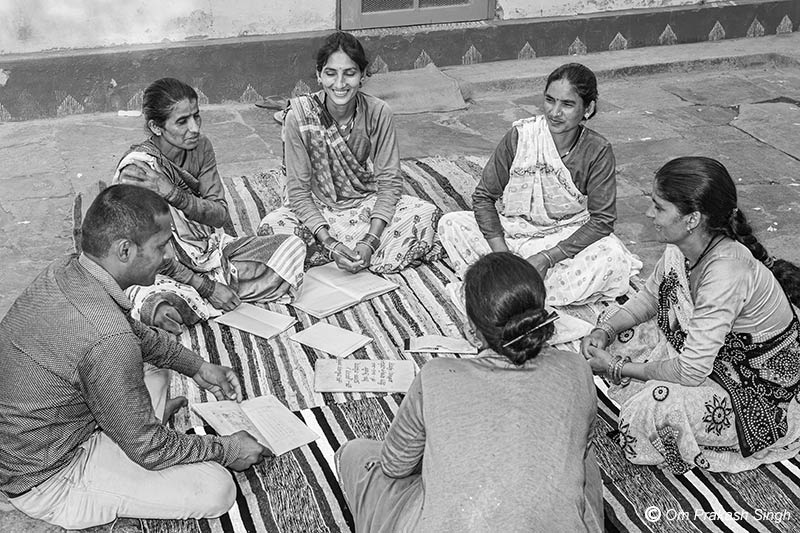
Springs are a lifeline for communities across the Indian Himalayan Region. An estimated three million springs are found in the region, supplying water for drinking, household use, livestock and agriculture. They are also closely connected with cultural and spiritual traditions, and many are regarded as sacred places within the landscape. Despite their central importance, springs in the region are under growing pressure. Government sources (NITI Aayog) have drawn attention to the widespread decline in spring flows and estimated that nearly half of the region’s perennial springs have either dried up or become seasonal. For mountain communities, this has brought increasing uncertainty over everyday water supplies, greater pressure on the sources that remain and, in many places, longer distances to be covered in search of water. The consequences of this decline present gender discrepancy - being more deeply experienced by women who shoulder much of the responsibility for securing water for drinking, cooking and other domestic needs. When a nearby spring weakens or dries up, it is often women who must travel farther, wait longer at water sources and devote a greater part of their day to obtaining water. A decline in spring flow is thus not only a question of reduced water availability; it often implies an increase in women's physical workload and a loss of time that could otherwise be spent on farming, livelihood activities, education, childcare or simply rest and better health. This may, in turn, bring negative consequences for their overall wellbeing and development. For addressing the growing spring-water crisis in the hill communities, springshed management is increasingly promoted as a means of reviving declining springs. Instead of focusing exclusively on the spring itself, this approach seeks to understand the wider recharge system that sustains it by supporting rainwater infiltration through the soil and rock in a wider area. Spring revival therefore involves identifying these recharge zones and undertaking measures that improve the infiltration and retention of water within the landscape. Such interventions cannot, however, be sustained through technical measures alone. Springs and their recharge areas form an integral part of lived village landscapes that are actively shaped by local communities. Within these landscapes, resource use is deeply gendered: while women are primary collectors of domestic water, their daily labor also extends across the wider recharge zones through farming, cattle rearing, and gathering fodder and firewood. Given this deep, multi-faceted interaction with the environment, women become vital repositories of local ecological knowledge, which further suggests that they should be recognized as important actors in the planning and long-term success of spring revival efforts. Consequently, many spring revival initiatives in the Himalayan Region have come be rooted in actively engaging local women. This photo story presents one such example from a village named Kulgad in Nainital district, Uttarakhand. Here a community-led quest for revival of their rapidly degrading spring brought forth an initiative with women on the forefront, governing their water resources and the associated ecosystem. The initiative is supported by an organization named the Central Himalayan Rural Action Group (CHIRAG). The title photo shows the active women members of the Water User Committee in Kulgad sitting in a meeting together with the field coordinator from CHIRAG. The committee is locally referred as the ‘Jal Upbhogta Samiti’.
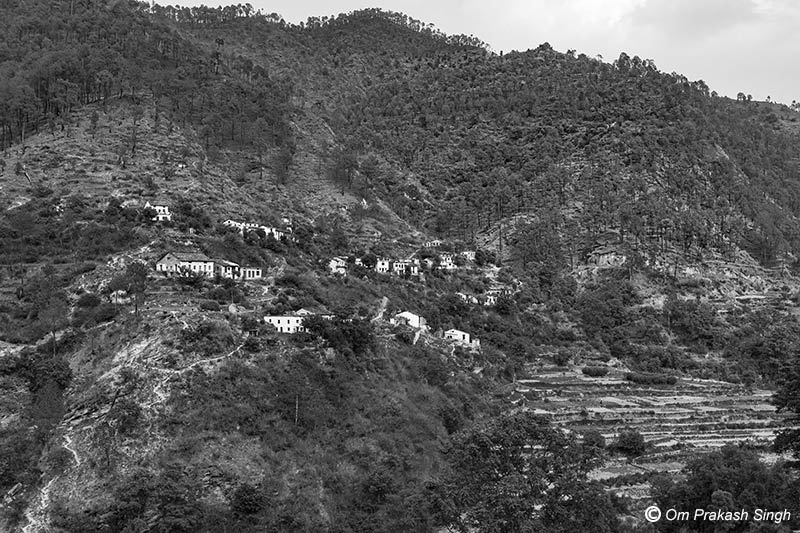
Kulgad village in the Kumaon Himalayas
Kulgad is a small village in the Ramgarh Block of Nainital District, nestled within the rugged landscape of Kumaon Himalayas. The village comprises 22 households belonging to a single caste community, and administratively, is a constituent of Simrad Gram Panchayat (village local self-government). Situated at an elevation of approximately 1,450-1,800 metres (4,750-5,900 feet) above sea level, the landscape of Kulgad is characterized by rugged hills, steep slopes, and narrow valleys. The natural vegetation is a mix of dense forests dominated by Chir Pine (Pinus roxburghii), Banj Oak (Quercus leucotrichophora), and Rhododendron. Adapted to the steep mountain slopes, local agriculture relies on terraced cultivation, with vegetable gardens and fruit orchards contributing significantly to the landscape.
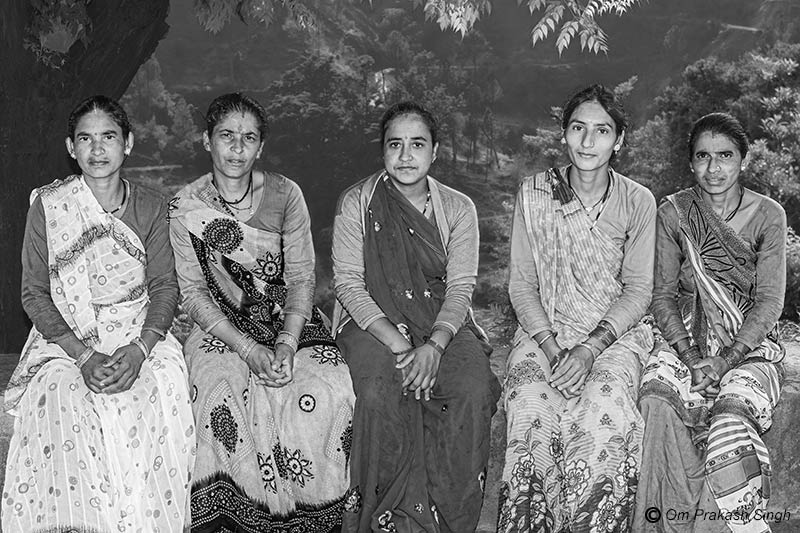
The five women members of Kulgad Water User Committee, including the Chairperson Sarita Bhandari (first from left) and Secretary Prema Bhandari (second from right)
The spring revival initiative in Kulgad village began in 2013, when villagers approached CHIRAG for support in response to the declining flow of their traditional spring-based drinking water source (naula), especially during the dry summer months. In response, CHIRAG started by creating a local institutional base in the form of a ‘Jal Upbhogta Samiti’ (Water User Committee) and the Saraswati Self-Help Group (SHG). While the SHG helps bring the village women together into a collaborative forum, the Water User Committee has been the driving force behind the spring revival initiative. It comprises nine members, five of whom are women. Two out of its three officeholders are women (as already introduced in the photo above). The Committee spearheaded the process of reviving the spring through repeated negotiations with the neighboring village Singoli where the recharge area (springshed) is located. It continues to manage the spring collectively, bringing villagers together for decision-making, monitoring, maintenance, as well as raising and managing the required funds. The Committee also helps translate technical knowledge introduced through CHIRAG into continuing local action. With women holding key leadership and monitoring roles, it has emerged as an important platform for women-led water governance.
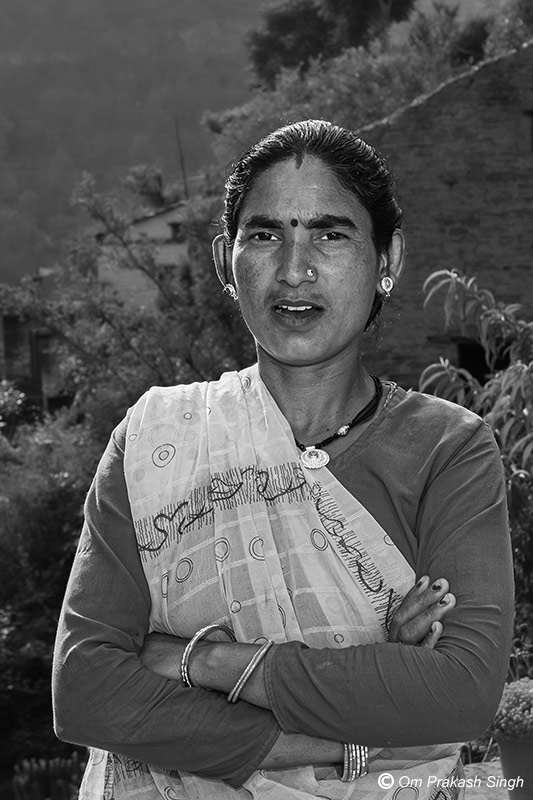
Chairperson Sarita Bhandari recalls the Kulgad’s spring revival journey
Sarita Bhandari recalled that the early stages of the initiative were as much about learning and building trust as addressing water scarcity. Soon after its formation, members visited another village where two communities shared the same water source, gaining first-hand insight into conflicts over access and how these could be resolved through dialogue and cooperation. This became especially relevant in Kulgad, where the spring’s recharge area lay largely within neighboring Singoli village. Reaching an agreement required repeated meetings and patient discussion over land ownership, future access and the benefits Singoli would receive. The women members of the Committee played a key role in helping build the understanding that spring revival had to benefit both communities.
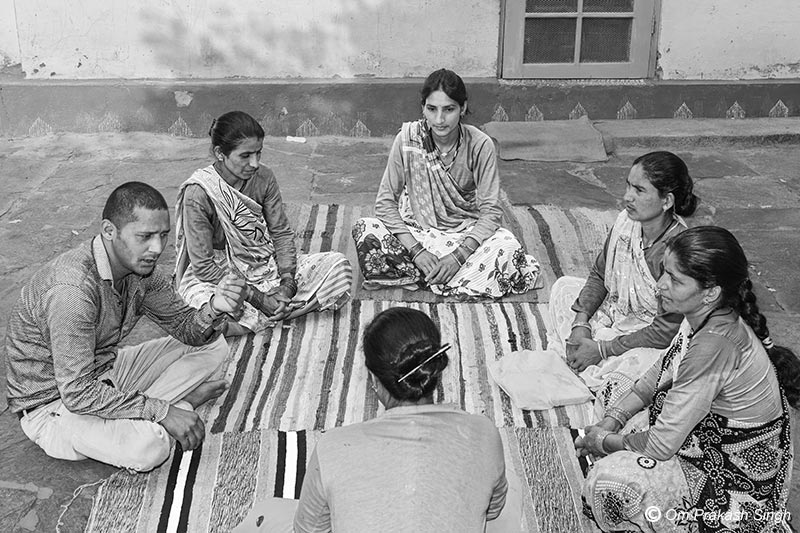
Women members of the Water User Committee in discussion with CHIRAG’s field coordinator
As evident, the spring revival process in Kulgad has been shaped through the active engagement of the village community, with women playing a leading role. Women’s lived knowledge about the spring, seasonal scarcity and household water needs, as well as understanding of the recharge landscape accessed for other livelihood activities, entered more directly into discussions and decisions about restoration and management of the spring through the Water User Committee. This process has received continuous support from CHIRAG’s field coordinators who help mobilise participation, organise meetings and training, support local planning and monitoring, and translate springshed science into practices that the women can understand and manage themselves. In this way, external support continuously strengthens women’s confidence, technical knowledge and participation in decision-making, while keeping them at the centre of long-term water governance.
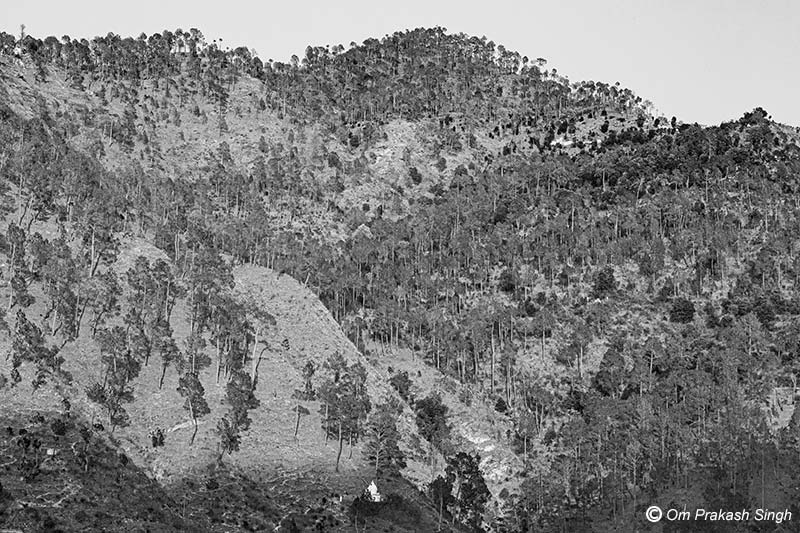
The springshed in Singoli village that sustains Kulgad’s naula
The water emerging at Kulgad’s naula is recharged higher up the slope, across a springshed that lies largely within neighbouring Singoli village. As women from the Water User Committee recall, hydrogeological surveys carried out by CHIRAG helped them understand how the slope, fractured rocks and underlying geology influence the movement and storage of rainwater before it reappears at their spring below. This meant that the wider recharge landscape had to be cared for. Since this land lies outside Kulgad, its restoration thus meant developing cooperation with Singoli—linking the hydrology of the spring directly with negotiation, shared benefits and inter-village water governance. This was successfully coordinated by the Water User Committee by engaging in repeated dialogue and negotiation over access and shared benefits. Restoration work began in 2014 and included contour trenches, khal, check dams and plantation over a recharge area of 27 hectares. Also, improvements were made around the spring. Women played a major role in both physical work and negotiations through committee leadership.
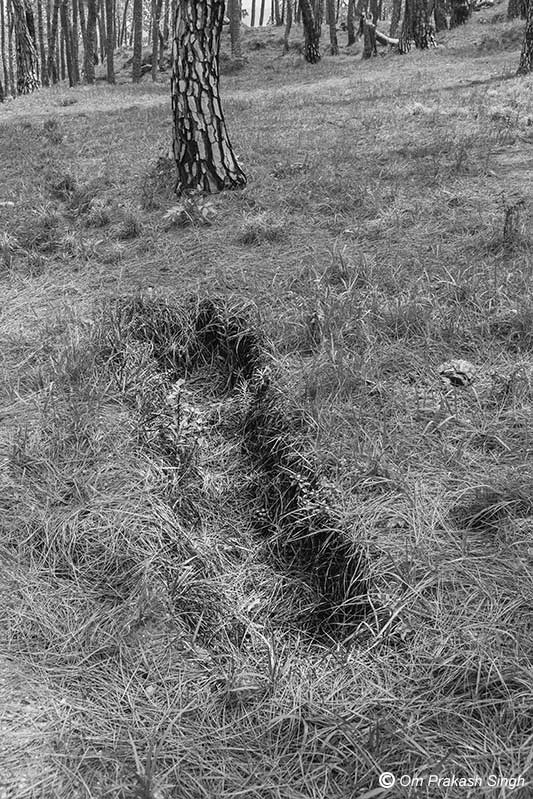
A contour trench dug along the hill slope to slow down runoff
Across the Kulgad springshed, about 1000 contour trenches were dug along the slope to slow the rapid movement of rainwater and allow more of it to soak into the ground. As the women members explained, the trenches form part of a wider recharge strategy designed to increase soil moisture and support the underground pathways that feed the naula below. Most of these trenches were constructed by women members of the community. These contour trenches require regular cleaning and maintenance since they get fill up with leaves and litter which reduces the space available for rainwater to collect. Cleaning is organized every year by the Water User Committee before the monsoon, around March or April.
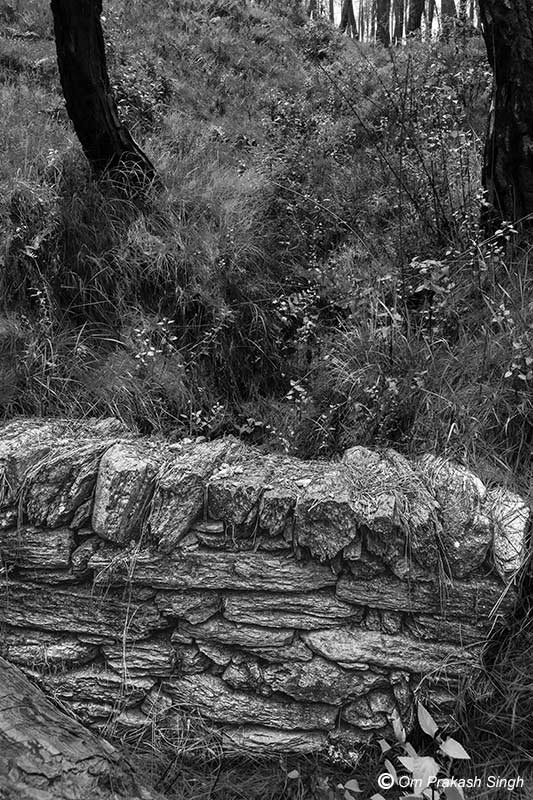
A check dam across a drainage channel along the hill slope
The Water User Committee also organized construction of five check dams across drainage lines as part of springshed treatment. Constructed jointly by women and men, these are built entirely out of stacked stones without mortar, forming a sturdy, permeable barrier designed to slow down surface water runoff rather than completely block it. This allows more time to the water to infiltrate into the ground. Further, a check dam physically intercepts flowing water, trapping eroding topsoil, silt, and debris behind the wall, creating a "spongy core" that naturally retains moisture. Both these processes help the recharge process. They also constructed seven percolation ponds (khal) across the springshed, which are in the form of small rainwater-harvesting depressions contributing similarly to the recharge process. The khal also provides drinking water to cattle and other animals grazing in the forest. A completely filled up khal can provide water for as long as one month.
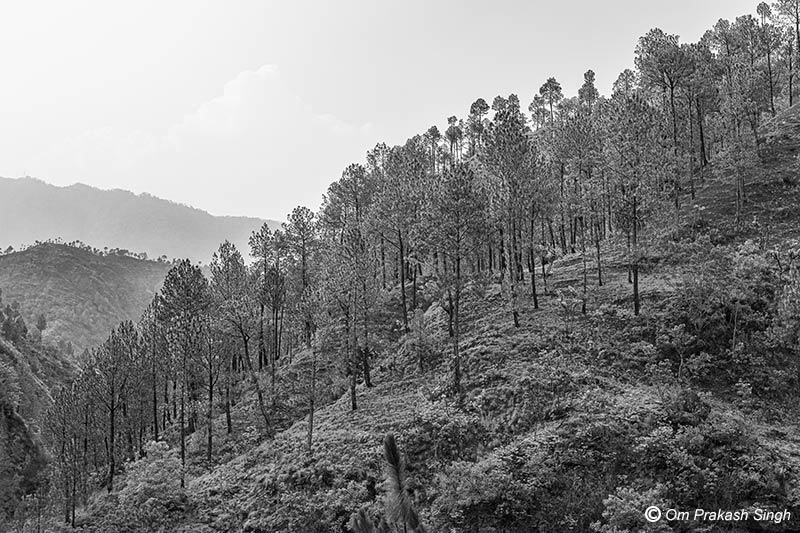
Afforestation across a hill slope in the springshed area
Large-scale plantation was also an important part of the spring revival effort, planting about 1,600 saplings and sowing around 2,000 seeds. This was undertaken collectively, with women members of the Committee and self-help group playing a prominent role. Plantation helps slow runoff, improve infiltration, retain soil moisture, stabilize slopes and reduce erosion. Bamboo was widely used because its extensive root system helps bind the soil, retain water and reduce landslide risk. Several local species were also planted, including Keral/Kwiral (Bauhinia purpurea), Kanal (Elaeagnus parvifolia), Lisuniya (Cordia myxa), Bhekua (Grewia optiva) and Phaliyant (Quercus glauca). These provide fodder, food, medicinal and other benefits. By relying on bamboo and local species, the intervention supported spring recharge and also brought benefits for the Singoli community whose land constitutes a major part of the recharge area.
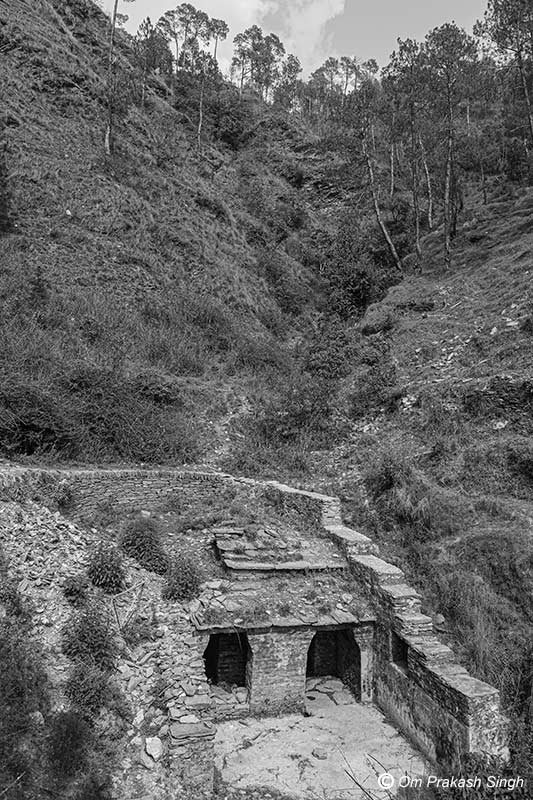
The revived naula—the spring-based water source of Kulgad—nestled below the steep slopes of its recharge landscape
The naula forms the visible heart of Kulgad’s spring system. Rain falling on the slopes above infiltrates through the soil and fractured rock, moving gradually underground before emerging as spring flow lower down the hillside. Built long ago around this natural seepage point, the naula is a stone-lined, roofed structure designed to collect the water emerging from the spring. It lies roughly 300 metres below the upper part of Kulgad village settlement. Revival of the springflow at the naula focused mainly on restoring the recharge landscape seen in the photo above, while a smaller part comprised of repairing and strengthening the stone structure around it; an activity undertaken jointly by both women and men.
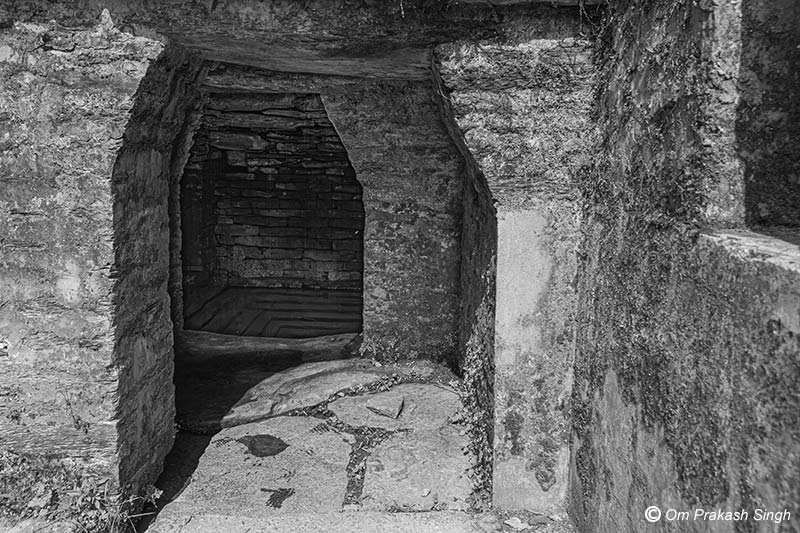
The stone-built entrance to Kulgad’s naula—a threshold to both a vital water source and a sacred space
The naula has a stone and masonry outer structure which helps protect its water from surface runoff, debris and sources of direct contamination, thus safeguarding the water quality for drinking purposes. According to the local community, it is also deeply linked to the ritual and cultural identity of Kulgad, regarded as a sacred place, approached with a reverence similar to that associated with a village shrine or temple. As women in the village explained, it is visited on important ritual occasions: a newly married bride offers prayers there, lights a lamp and carries home a pot of spring water to share with family members as an auspicious first offering. Lamps and offerings are also made during certain festivals and sacred observances.
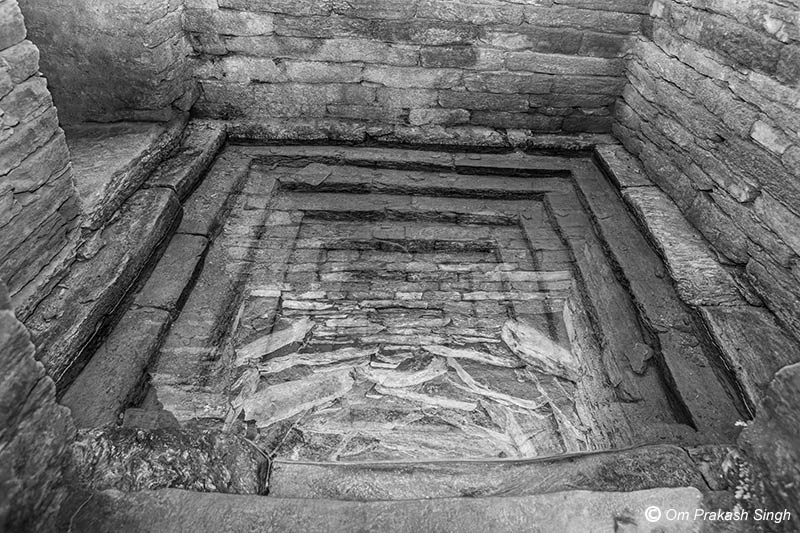
A stone-lined tank inside Kulgad’s naula filled with groundwater seepage
Inside the naula exists a covered chamber where a small stone-lined tank has been built around the point where the seepage emerges through the rock fracture. The tank allows the seepage to accumulate into a usable pool. According to the women interviewed in Kulgad, spring discharge had declined sharply before restoration, especially during the dry summer months. They recalled how the flow was found to be only about 4 litres per minute when CHIRAG carried out hydrological measurements for the first time. During the period of declining springflow, women had to fetch drinking water from sources as far as one-and-a-half or two kilometres located either uphill or further down. After the springshed treatment, the springflow improved to as much as 14 litres per minute. Although this discharge varies seasonally, monitoring suggests that the spring now responds more strongly to rainfall and recharge.
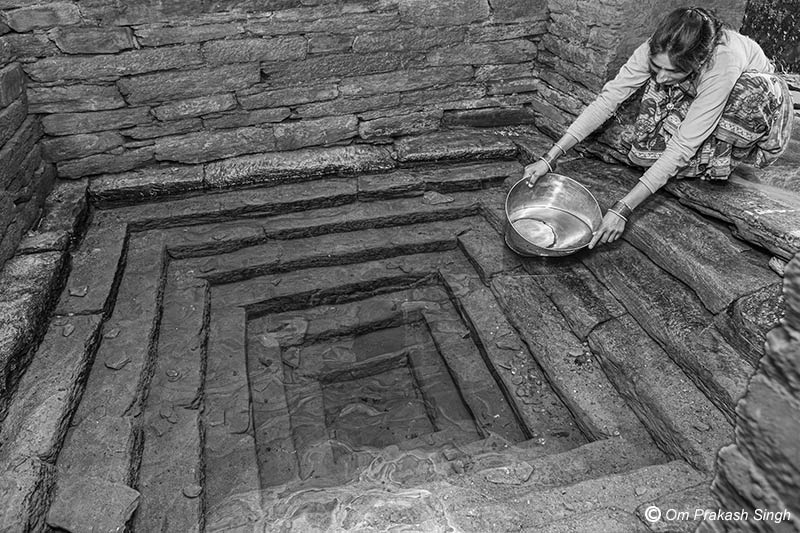
Drinking water drawn from Kulgad’s naula using a metallic bucket
The naula at Kulgad is the primary source of water in the village for purposes of drinking and cooking. Water is typically drawn by women twice a day - morning and again in the evening. It is withdrawn directly from the tank using a clean container which could be either metallic or plastic. The Water User Committee is responsible for maintenance of the naula. It is cleaned at least twice a year - before and after the monsoon. Cleaning after the monsoon is especially important because soil, stones and debris washed down from the slopes can accumulate around and inside the structure. Routine clearing of grass and vegetation is undertaken by the community, while exceptionally heavy debris removal may require collective labor by village men because of the strenuous work involved.
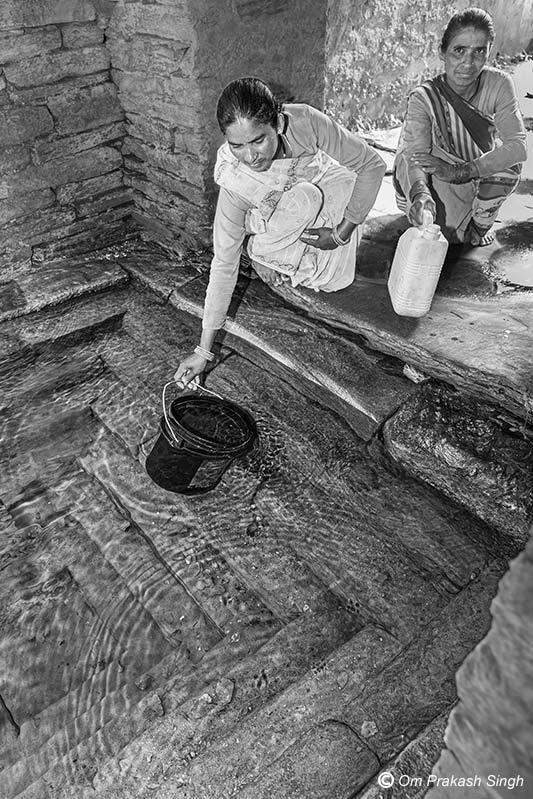
Drinking water withdrawn from Kulgad’s naula using a plastic container
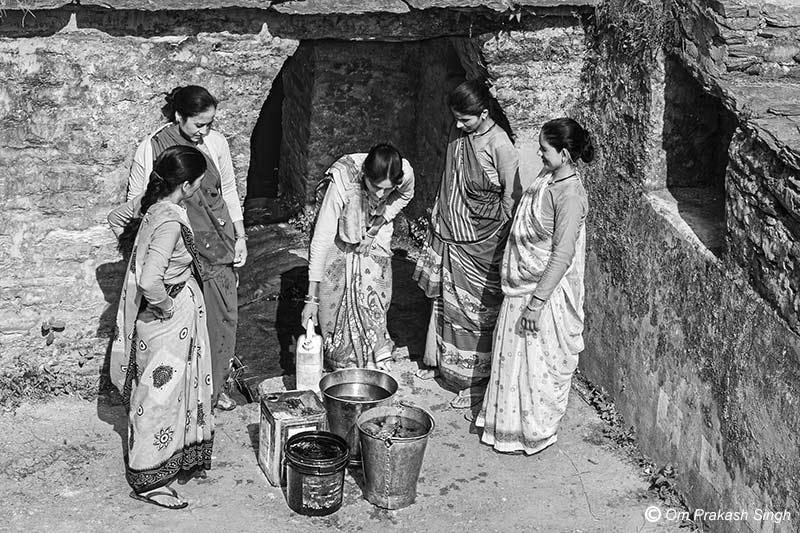
Women keeping their filled-in water containers at the naula entrance, as they fill these one by one
Since the space inside the covered chamber of the naula is quite confined, women have to fetch water one at a time, even when they arrive in a group. Generally, they wait outside until everyone has filled their containers, before trekking back home.
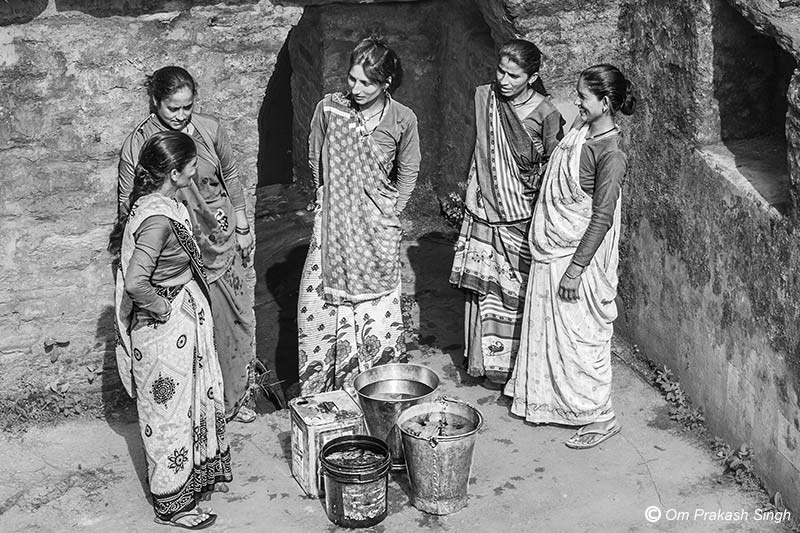
Women members of the Water User Committee interacting at the entrance to the naula
The naula serves as an important social space, especially for women. Regular visits provide opportunities to meet beyond the household, exchange news, discuss family and village matters, and share everyday concerns. Such interactions help strengthen social bonds and mutual support. For women members of the Water User Committee, the naula also offers an informal setting in which emerging issues related to the spring, its maintenance or village water use can be discussed. In this way, Kulgad’s naula remains not only a source of water, but also a social hub where women’s relationships, collective awareness and community connections are continually reinforced.
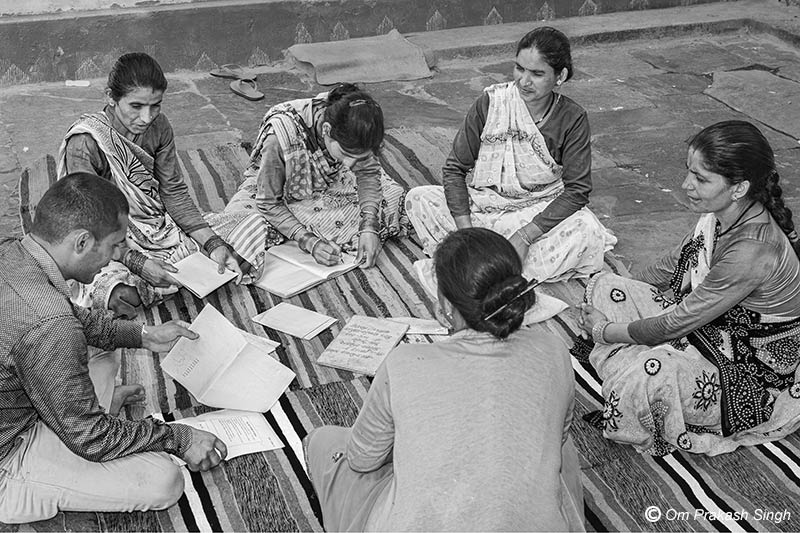
Women members of the Water User Committee review performance of the naula with CHIRAG’s field coordinator
The work of spring revival in Kulgad did not end with the initial restoration. Women members of the Water User Committee continue to meet once every month, usually on the 5th, to review ongoing activities, share information and discuss issues related to the spring and village water management. They often receive support from CHIRAG’s field coordinator. Maintenance includes clearing the naula, cleaning contour trenches before the monsoon, checking recharge structures and vegetation, and organizing repairs when required. The committee also monitors spring discharge and maintains a small common fund, built partly through a monthly contribution of ₹10 from every household, to meet maintenance costs when voluntary labor is not sufficient. In this way, restoration has become an ongoing process of local monitoring, collective upkeep and women-led water governance.
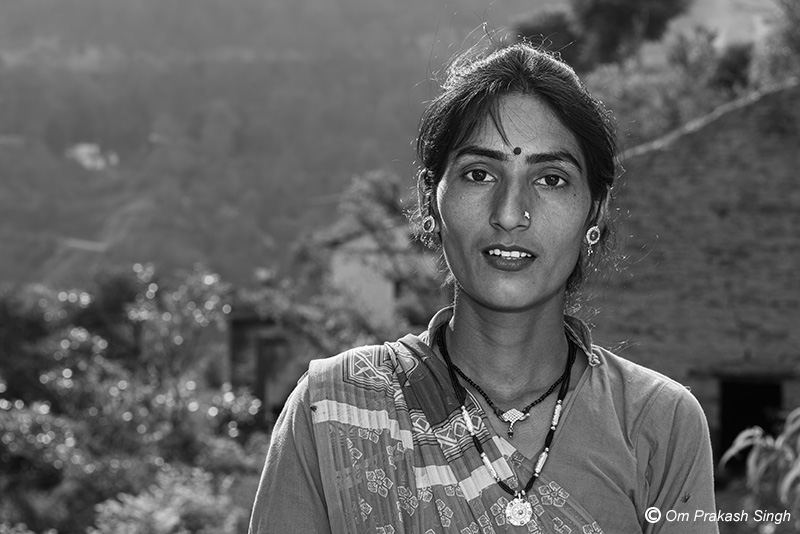
Prema Bhandari – a Key Resource Person in Kulgad’s spring revival intervention
Prema Bhandari is a ‘Key Resource Person’ (KRP) in the spring revival intervention supported by CHIRAG, besides being the Secretary of the Water User Committee. She received practical training in spring-discharge measurement, water monitoring and record-keeping, alongside broader exposure to the basic hydrogeological understanding needed to interpret changes in the spring. She plays an important role in sustaining the spring-revival process in the village at two levels. First, she regularly measures and records the spring discharge which helps the community to keep track of the seasonal changes in flow. Second, through continuous interaction with the community, she ensures that this knowledge is used by the community in the process of the spring flow maintenance. In this way, she represents the growing role of local women as knowledge-holders as well as decision-makers in water governance.
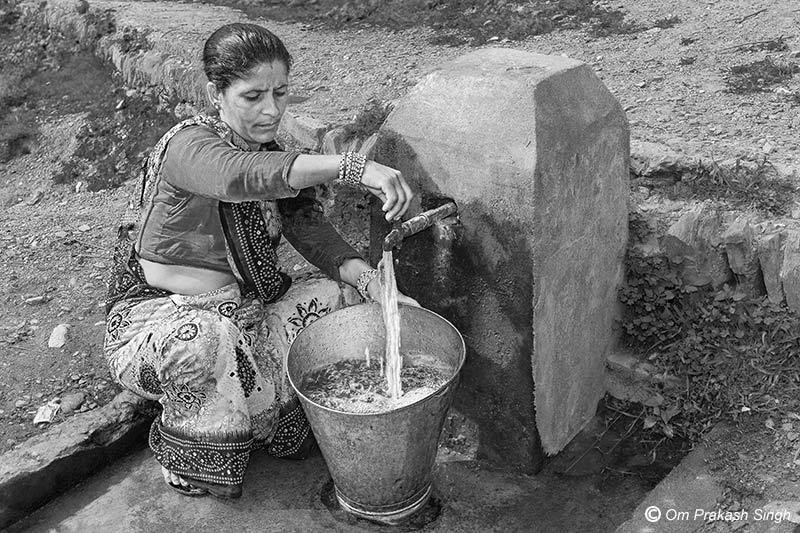
Water for domestic supply being collected from a public tapstand inside Kulgad village
Kulgad also receives piped water supply from a multi-village government scheme which is sourced from a local stream. This pipeline was laid before 2007, and its water is used by women mainly for bathing, washing, livestock and other household needs. While this supply is said to be mostly regular and sufficient even during the summer, there is a preference for water from the naula for drinking and cooking mainly because of its taste and perceived quality. The revived naula is therefore the key source of drinking water, further serving as a valuable backup when the piped system sometimes gets disrupted.
This story of women-led water governance through spring revival and its continued management at Kulgad brings forth several important lessons. First, it illustrates how rural women can move beyond water collectors to becoming water managers and knowledge-holders. As members of Kulgad’s Water User Committee, they have matured into key actors who decide and guide the community on how water should be understood, restored and governed. In their own words, they have transformed from women who were once hesitant to even speak in public to women leaders who represent and decide for their village.
Second, Kulgad’s story of spring revival shows that women’s knowledge of water should not be understood simply as something acquired through training. Long before the revival initiative began, women already possessed detailed experiential knowledge of the naula—its seasonal behavior, periods of scarcity, preferred uses, alternative sources and the additional labor created when water became difficult to obtain. CHIRAG’s training added a new layer of hydrogeological understanding, helping them relate these everyday observations to recharge zones, slope, fractured rocks and groundwater movement. The result was a process of knowledge co-production in which scientific understanding complemented, rather than replaced, women’s lived knowledge of the water landscape. Their ability to measure and record spring discharge further strengthened their role as producers and custodians of water knowledge.
Third, women’s leadership also extended beyond managing the naula itself to governing the wider springshed. Because much of the recharge area lies within neighboring Singoli village, restoration depended on negotiation, trust-building and an agreement over shared benefits. Women members participated in this process as well as in the physical work of creating recharge structures and plantation. Their role therefore extended from managing household water to engaging with questions of land, recharge, maintenance and inter-village cooperation. This is significant because it demonstrates that women-led water governance is not confined to managing a water point; it can involve influencing decisions across the larger social and ecological landscape on which that water source depends.
Fourth, women’s leadership has helped turn spring revival from a one-time intervention into a continuing system of local management. This continuity is particularly important in the context of increasing water uncertainty in the Himalayas. A functioning spring enhances water resilience in spatially dispersed mountain villages in the face of unforeseen crisis. Further, the knowledge and organizational capacity developed among women strengthens their ability to respond to changing conditions. Climate resilience in this context is therefore not only about increasing recharge or multiplicity of sources; it is also about strengthening the institutions capable of observing change and acting on it.
Seen from a wider perspective, the Kulgad experience connects strongly with Sustainable Development Goal (SDG) 5 on gender equality, SDG 6 on water and participatory water governance, and SDG 13 on climate resilience. It also speaks to the human right to water, which is concerned not only with physical access to adequate water but also with participation, accountability, equity and non-discrimination. The deeper lesson from Kulgad is therefore that women’s participation becomes transformative when responsibility for water is accompanied by knowledge, voice and decision-making authority. Women who once experienced water insecurity primarily through the burden of collecting and managing water are now helping shape how that resource is understood, restored, monitored and governed. In this sense, the revival of Kulgad’s naula is not only a story of a spring brought back to life, but also of women gaining a stronger role in shaping the future of the water landscape on which their community depends.