
Raising Water Consciousness through
World’s Biggest Photo Exhibition and
Largest collection of Photo Stories on Water
Photo Stories | Water and Environment
Nature-Based Water Security and Climate Resilience: Local Wisdom from the Thar Desert
Nandita Singh and Om Prakash Singh
22 June, 2026
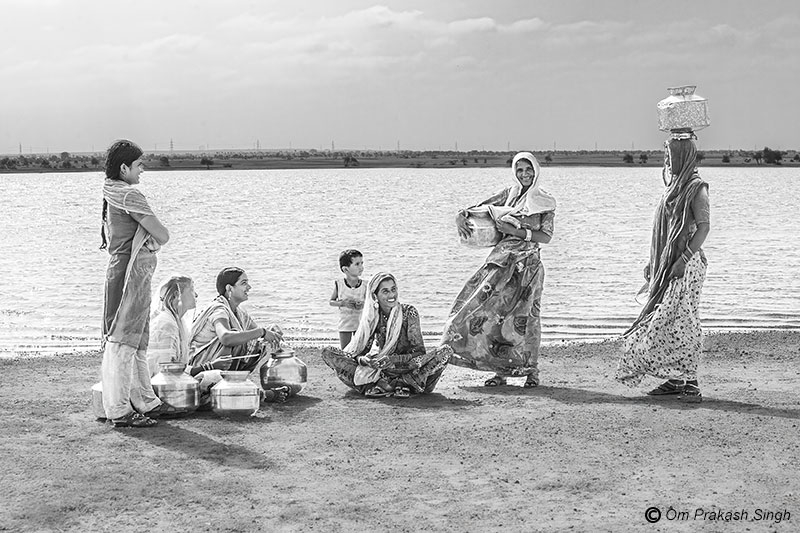
Water and climate are deeply intertwined in the Thar Desert, where survival has long depended on the ability to live with uncertainty. In this vast arid landscape of sand dunes, extreme temperatures, erratic rainfall, and recurrent droughts, water is scarce, groundwater is often deep and saline, and perennial rivers are absent. Yet communities across the desert have sustained life for generations through community-created nature-based solutions designed to capture, store, and conserve rainwater. Rooted in local ecological knowledge, collective stewardship practices, and culturally embedded beliefs, these systems have enabled people to adapt to the harsh climatic conditions and secure water in one of the driest inhabited regions of the world. In this sense, water security and climate resilience have always been closely interconnected: while reliable access to water strengthens the capacity of communities and ecosystems to cope with climatic stress and uncertainty, resilient ecological and governance systems help sustain and protect these nature-based water solutions over time. Jaisalmer district in Rajasthan, the westernmost district of India, lies at the heart of the Thar Desert and includes Ramgarh – the driest region of the country. Here the temperature rises above 48°Celsius during summers and average annual rainfall does not often exceed 100 mm. This region is home to Viprasar, a locally well-known traditional wetland system historically created by the community as a nature-based response to water scarcity, recurrent droughts and climatic uncertainty. The wetland is situated on the outskirts of Netsi, a medium-sized village located about 70 km north-west from the district headquarter Jaisalmer. This photo story explores how water security and climate resilience have been built in and around Netsi through Viprasar across generations. The wetland was an innovation of its time - created nearly 300 years ago by the residents of twelve neighboring villages, drawing upon local wisdom that encompassed not only a deep ecological understanding of the terrain, but also collectively developed stewardship practices and cultural beliefs to sustain it. Over time, Viprasar has come to be used and managed primarily by the residents of village Netsi. This nature-based solution rooted in local wisdom offers several important lessons for policy and practice concerning water sustainability and climate adaptation in an increasingly vulnerable world. The title photo depicts women and girls from village Netsi enjoying the cool breeze on the shores of Viprasar, while discussing important social issues.
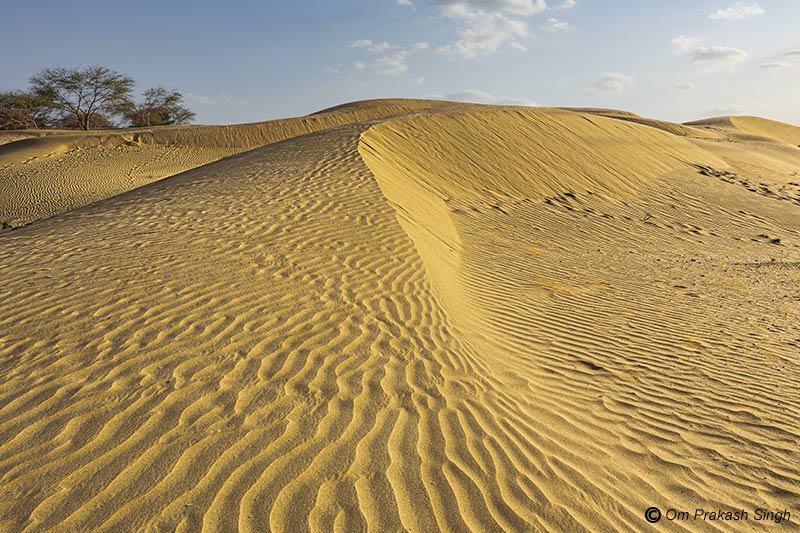
Vast stretches of sand dunes defining the arid landscape of the Thar Desert in Ramgarh region of Jaisalmer district
The Thar Desert, also known as the ‘Great Indian Desert’, stretches across over 200,000 square kilometers, covering parts of northwestern India and eastern Pakistan. About 60% of this desert lies in the state of Rajasthan in India, with the largest stretch in Jaisalmer district. In the driest portion of this district – Ramgarh – the landscape is primarily sandy, looking like a sea of sand dunes as seen in the photo. At places, however, the soil may be stony containing rocky ridges and hard undulating plains. Due to the prevailing arid conditions, vegetation is very scanty and constituted of primarily tropical thorn forest. Rainfall is scarce and erratic—arriving briefly during the monsoon months or even failing entirely for years in succession. There exist no perennial rivers or natural lakes in the region and the water table is very low, generally deeper than 40 meters. Droughts are a common feature here, with local folklore suggesting an average of four events occurring every decade.
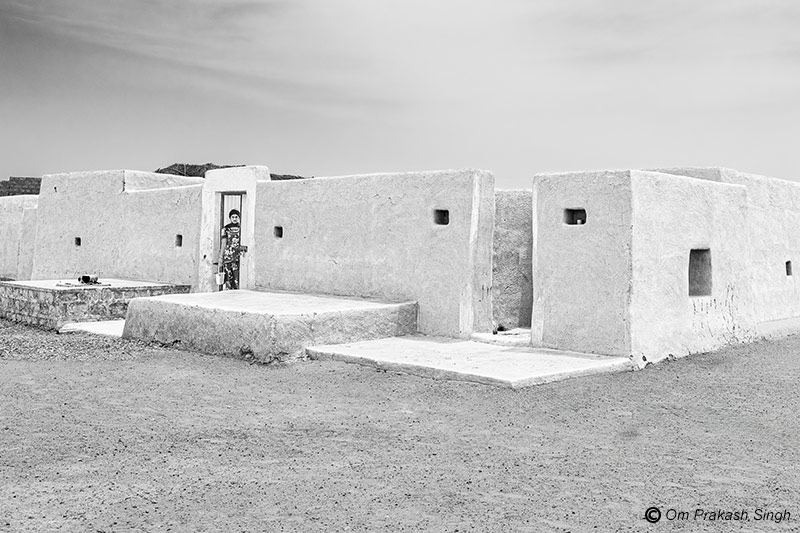
The rural habitation in Netsi comprising traditional mud houses
Despite the hostile environment, Thar Desert is reckoned as the world’s most densely populated desert, with an estimated average of over 80 persons per square kilometer. This dramatic figure is indicative of how local communities have successfully created and sustained climate-resilient lifestyles enabling them to survive and thrive through generations. They have deeply observed and experimented within the limits of the prevailing environmental conditions, devising ingenious adaptive nature-based solutions that reflect across diverse spheres of their lives. The rural habitation at Netsi portrayed in the photo above is an example. Mud houses represent an adaptation to the hot hyper-arid climate of Ramgarh because thick earthen walls act as natural thermal insulation. They absorb intense heat during the day, helping keep the interiors cool, and gradually release warmth at night as desert temperatures fall sharply. This helps to naturally regulate indoor temperatures without the need for modern air conditioning.
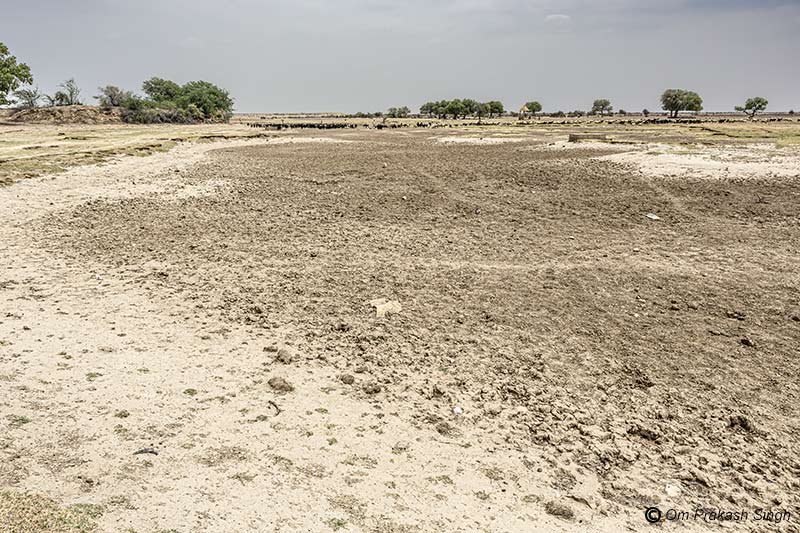
The wetland basin called Viprasar on the outskirts of Netsi village
Viprasar is an outstanding example of how nature-based solutions for water supports climate resilience within the uncongenial arid environment of Ramgarh. It is a community created wetland system rooted in an ingenious technology that helps catch every drop of rain that falls in its catchment which is said to spread across a large area approximating 48 square kilometers. About twelve generations back in history, elders of twelve neighboring villages located in the Ramgarh region realized the value of the runoff naturally collecting in the Viprasar basin which existed as a large depression amid sandy flatlands and rocky terrains. They jointly decided to develop the basin as a source of ‘sweet’ drinking water – their greatest need of the time since the groundwater is deep and saline. This required converting the open basin into a runoff storage structure - made possible by blocking the natural outflow through construction of an earthen embankment. On one side, the edge of the basin was intentionally left unaltered to function as a natural overflow outlet, thus preventing floods and damage to the embankment.
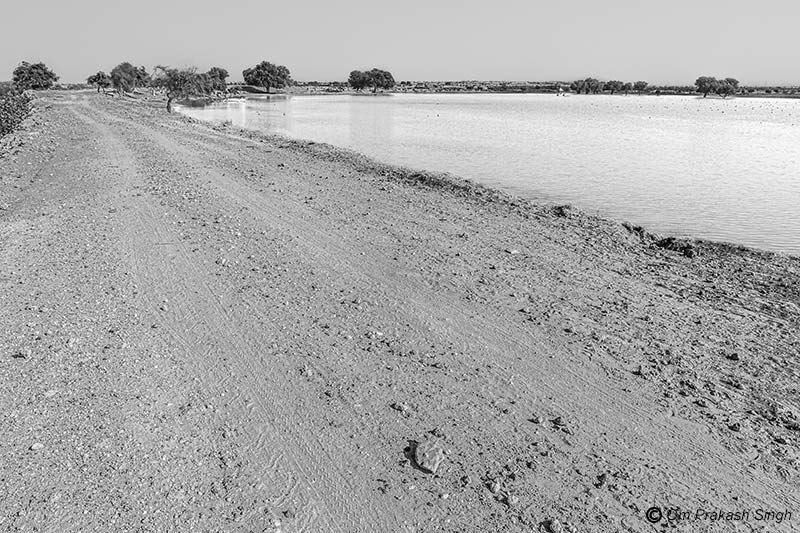
The recently strengthened embankment of Viprasar
The sustenance of Viprasar through generations is a result of collective stewardship by the community. The foundation of its embankment is said to be 300 years old, but it continues to stand robust and functional due to the regular repair and rejuvenation undertaken by the community. The embankment is earthen, and as a part of its regular maintenance, the silt that gradually aggregates in the basin from the inflowing runoff or dissolving down from the embankment itself, is routinely dug out and reinforced back. The latest rejuvenation was organized by the community during the summer of 2024, when the embankment was strengthened across all its dimensions. The work was completed in collaboration with an organization named Tarun Bharat Sangh. As a result, the embankment now measures about 800 meters in length and 2.5 meters in height (in the middle), while its base width is about 6 meters, tapering off to 3.5 meters at the top.
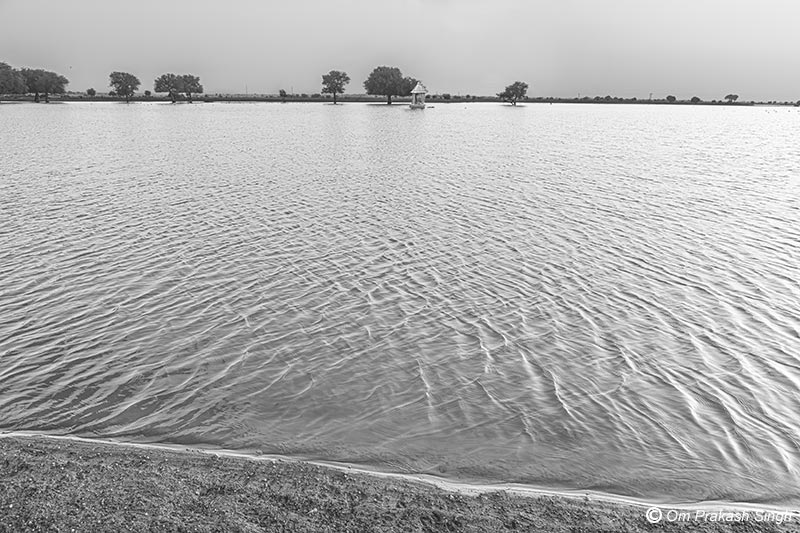
Viprasar as a large pond replenished by runoff generated from monsoon rainfall
The embankment at Viprasar converts the wetland basin into a rainwater harvesting system that is believed to capture runoff flowing from distances as far as 12 km. According to local climatic and hydrological knowledge, even a single monsoon shower is sufficient to fill the pond, if it brings 30–50 mm of rainfall. This can create a water spread area of nearly 8 hectares with a maximum depth of about 2.5 meters. Such a phenomenon roughly occurs once every 2-3 years, and the surface water so collected may remain available for a period up to one year. The surface water collected in the pond is locally referred as ‘palar pani’ which is considered as sweet and potable, compared to the groundwater which is saline and therefore largely non-usable for drinking purposes.
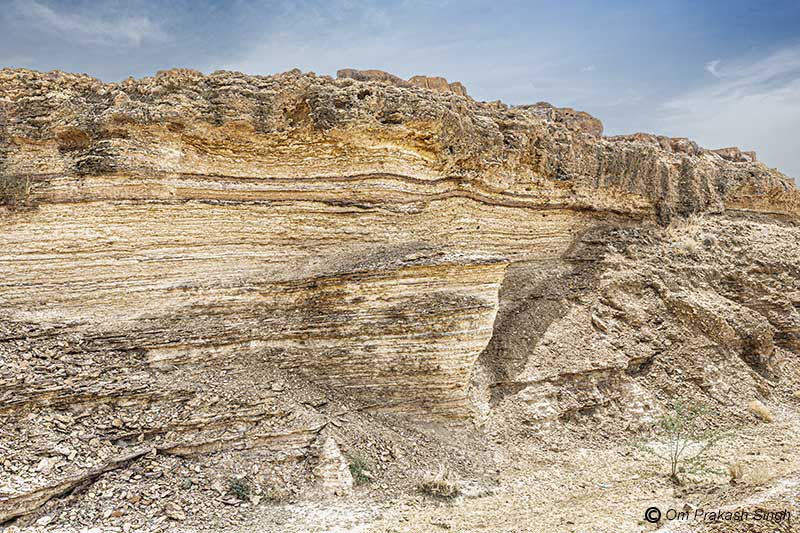
Local stratigraphy in Ramgarh region showing impervious layers of Fuller’s Earth
Desert sand is highly permeable, making long-term water retention in Viprasar nearly impossible. However, community elders observed centuries ago that certain pockets in the desert landscape possess distinctive stratigraphic characteristics that allow rainwater to be retained. These are the impervious layers of Fuller’s earth, locally called ‘multani mitti’, a natural clayey substance that helps reduce seepage and support water retention. According to local hydrological and stratigraphic knowledge, layers of multani mitti occurring at varying depths and thicknesses are found across the Ramgarh region, where they help support the harvesting and retention of rainwater for drinking and agricultural use. A glimpse of these layers in pale yellow to yellowish brown color can be seen in the photo above.
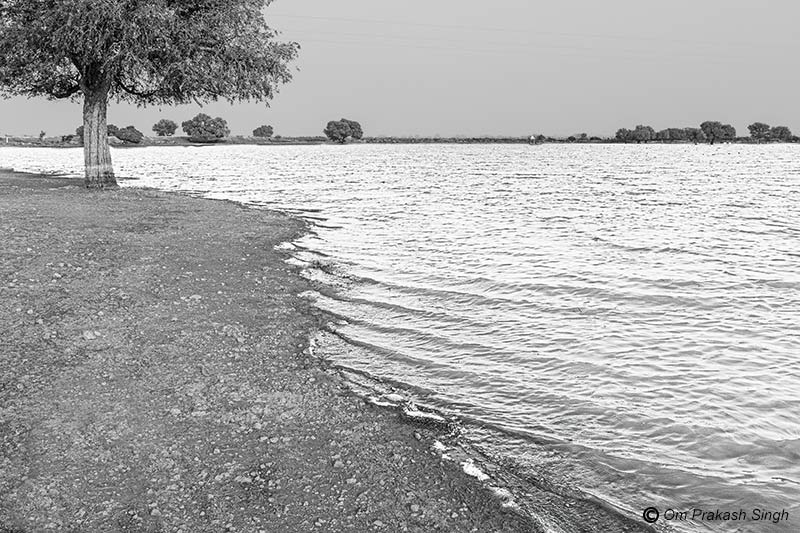
Viprasar pond – the primary drinking water source for the village community at Netsi
Viprasar is well-known in the region for its sweet and clean drinking water. Originally, the residents of all the twelve villages who founded the wetland were dependent on this source. However, most of them have developed their own drinking water sources over time, so that presently it is mainly the community at Netsi that depends upon it, although residence is not a criterion determining water access. The community has devised clear rules to safeguard the water quality, which are seriously adhered to by all users, whether belonging to Netsi or from outside. Bathing and washing in the pond are strictly prohibited, and violations may result in a fine of Rs. 5,000 (approximately 52 USD). Although the village receives piped water supply from the Indira Gandhi Canal, this water is generally not regarded as potable since it is perceived as dirty and polluted.
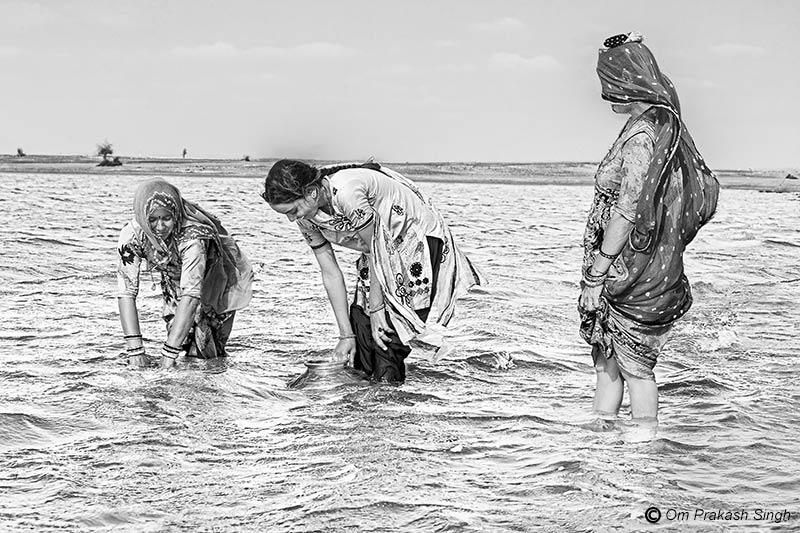
Happily filling pitchers with ‘sweet’ drinking water at Viprasar
Drinking water from Viprasar is a task handled by women and girls of Netsi, who are the domestic water managers. Since the wetland is located on the outskirts of the village, it is within a good access range, given the ensured water quality as benefit. During the period when Viprasar holds water, they generally visit twice a day to collect water – in the late morning and early evening hours. Caste or ethnicity is no bar to water access and no separate areas are designated for different social groups.
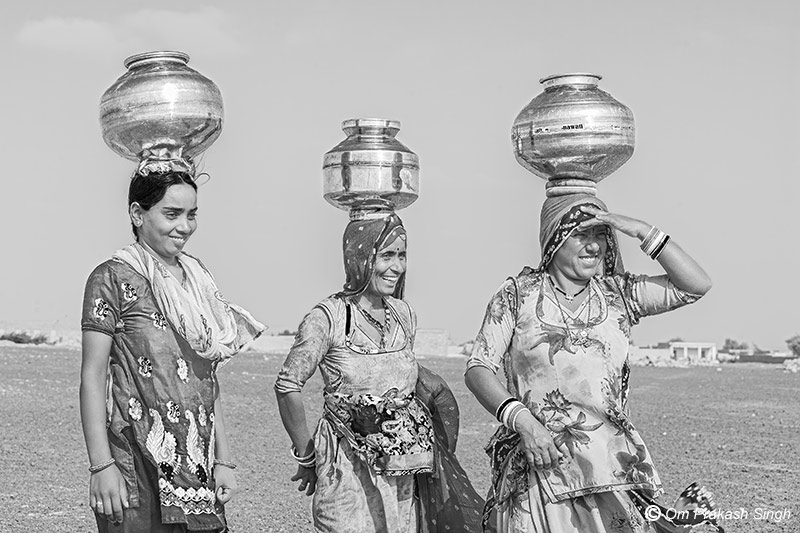
Joyfully returning home with pitchers full of drinking water from Viprasar
Women and girls do not only benefit from water access at Viprasar, but they are rights holders, knowledge holders, and water stewards whose participation strengthens its governance and resilience. They are the primary caretakers of the pond, who ensure that the community rules for water quality maintenance are learnt and followed. The most prominent group is the married women who are not born here but become community members through marital ties. They learn to use and care for Viprasar and its water in the company of older women at home and in the neighborhood, and as mothers they are responsible for passing on the tradition to the children. Young unmarried girls learn the norms of pond use and care as part of their grooming for domestic water management.
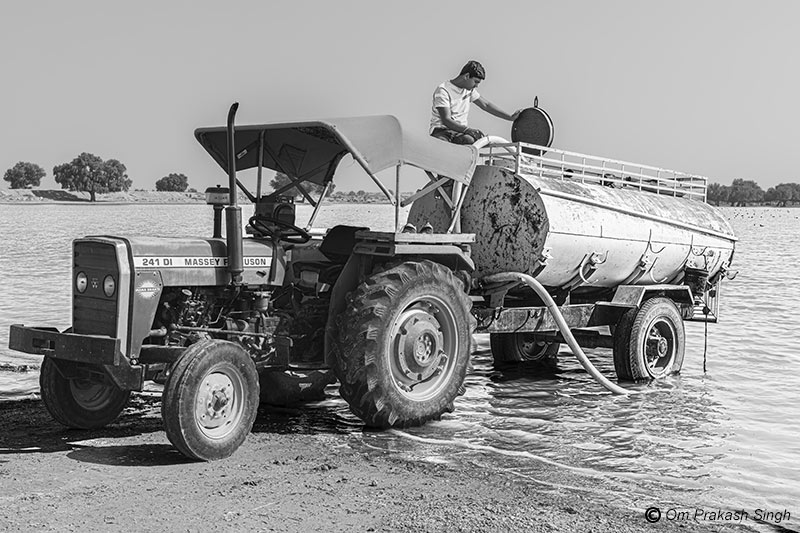
Drinking water obtained in bulk for storage at home or supply to other needy families
Besides, being collected in person by women and girls, the community norms also allow the water to be transported in bulk using tractors. This water may be procured for individual use by families or transferred as help to families that lack manpower at nominal cost.
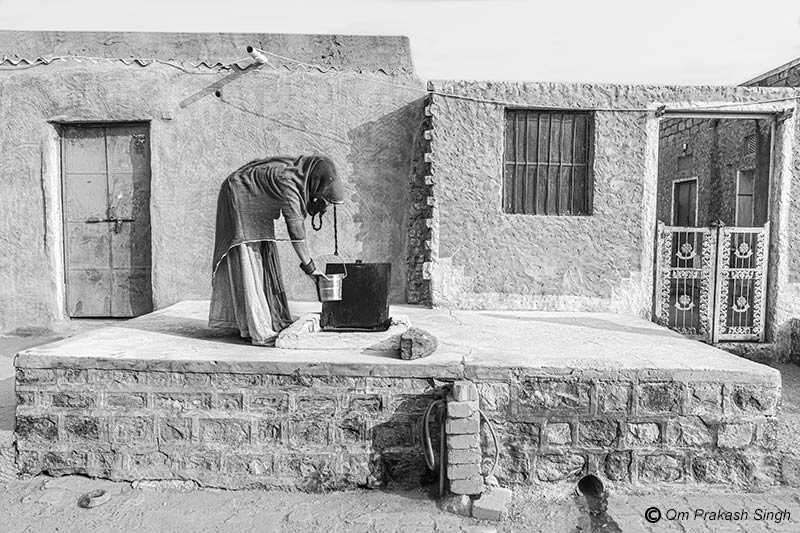
Viprasar water stored in a household tank called ‘tanka’ being conveniently withdrawn as drinking water
In recent years, drinking water collection practices are undergoing transition, and many families prefer to store water in bulk at home. Viprasar water is being increasingly transported home by tractor-trolleys and filled into underground household tanks called ‘tanka’. These are a traditional rainwater harvesting structure, constructed either in the front of the house or in the backyard, to store rainwater for drinking purposes. But with improved means of transportation, tankas are being increasingly used for storing transported bulk water supply after the harvested rainwater stock comes to an end. Sometimes additional tankas may be constructed for storage of transported bulk water supply. This practice greatly facilitates women and girls, relieving them of the burden of carrying home loads of water from the pond multiple times a day.
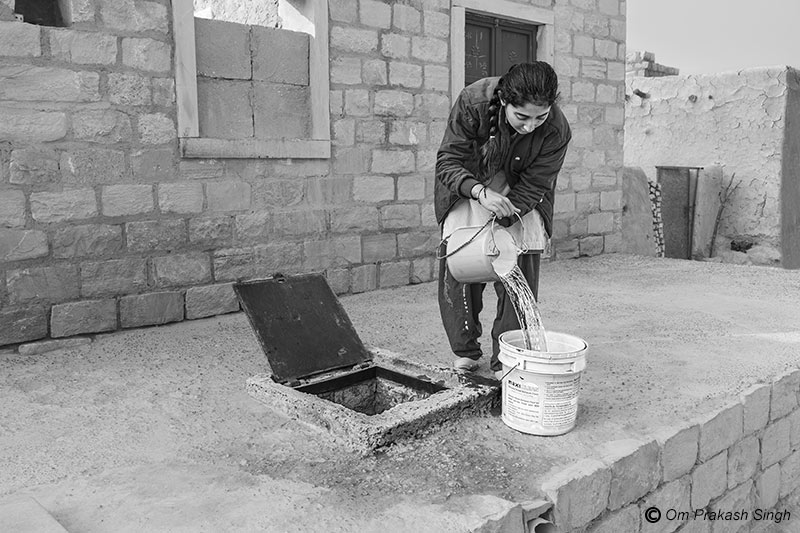
A young lady procuring Viprasar water stored in a household tanka for domestic use
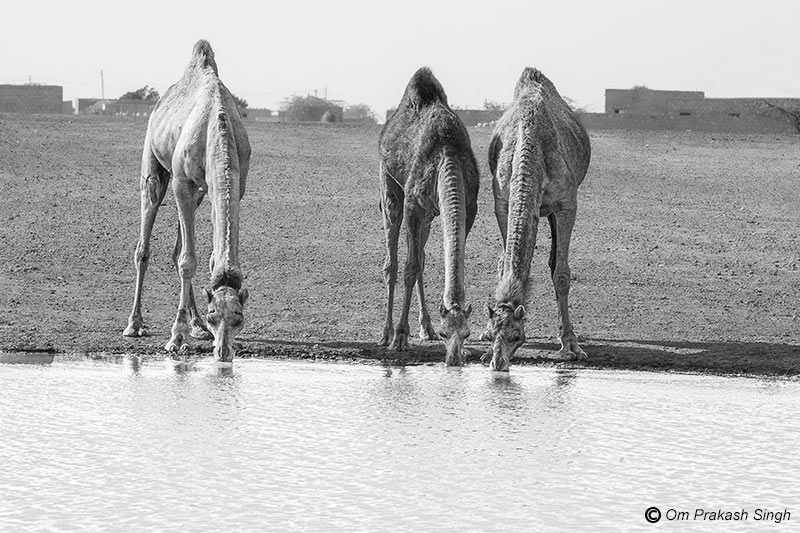
Camels drinking water at Viprasar
Beside human beings, Viprasar is an important source of drinking water for the livestock of Netsi and the neighboring villages. Animal herding is an important livelihood in Netsi and Ramgarh region in general. Almost every household possesses animal wealth in the form of sheep, goat, cattle and camels, the total population being over 5,000. Livestock are brought to the pond during the day to help quench their thirst. Viprasar water is locally believed to be ‘light’ in nature, facilitating digestion and stimulating their appetite. Livestock herders therefore observe that soon after drinking the pond water, animals prefer to graze, which keeps them healthy and energetic.
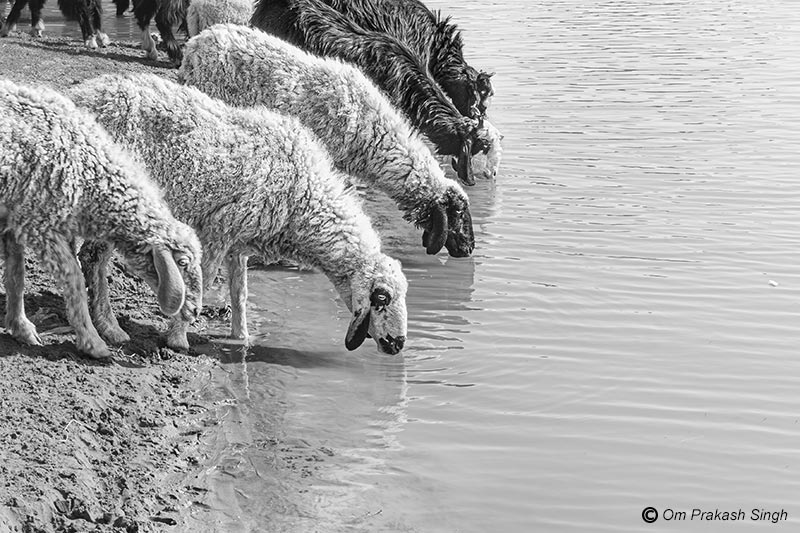
A herd of sheep drinking water at the shore of Viprasar
Before the recent rejuvenation of Viprasar, the pond typically retained water up to seven to eight months after the monsoon. The restoration has further strengthened its climate resilience through deepening of a section of the wetland basin which now continues to retain water even in the summer months. This small but significant modification allows surface water to remain available for almost the entire year, thus supporting livestock, wildlife, and the broader wetland ecology.
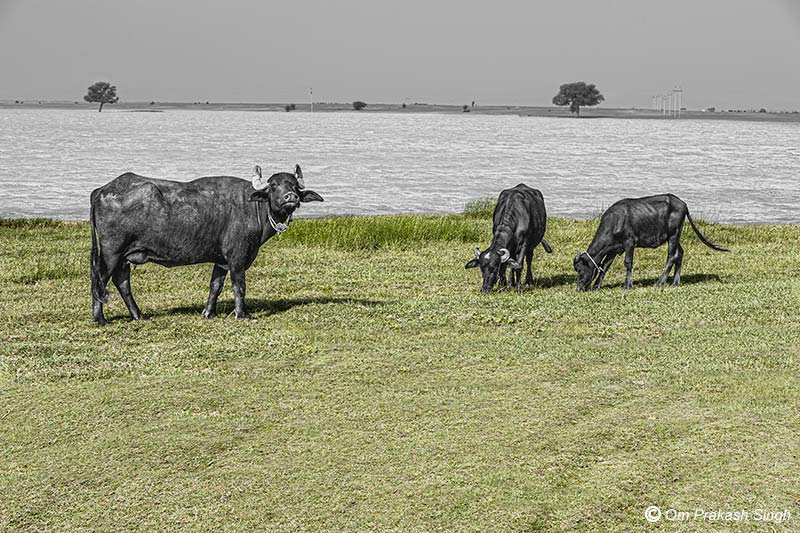
Buffaloes – a rarity in deserts – grazing on the pastures nurtured by Viprasar
The banks of Viprasar turn green after the monsoon showers, nurturing patches of healthy pasture in an otherwise dry and sandy landscape. By retaining moisture and supporting shallow groundwater recharge, the wetland creates conditions where grasses and other vegetation continue to grow long after the rains have passed. For local herders from Netsi and around, these pastures are a vital source of fodder for cattle, sheep, goats, and even buffaloes, helping sustain livestock and livelihoods through the annual dry season and droughts.
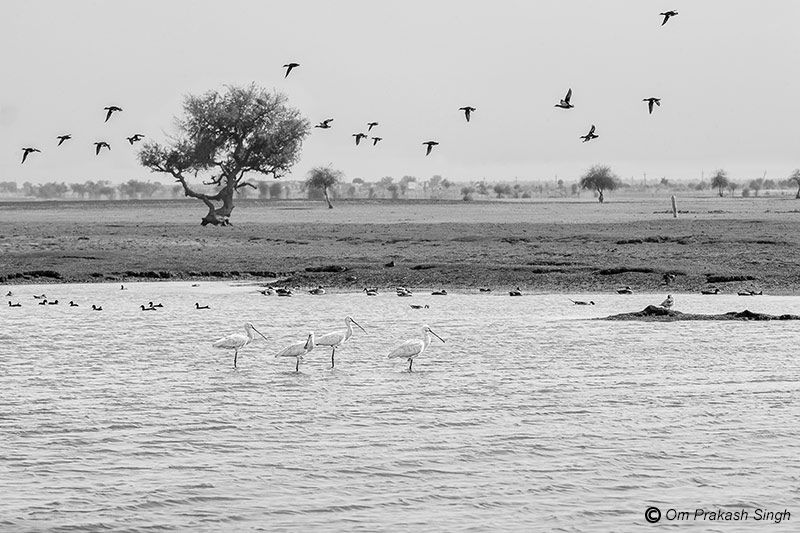
Viprasar as the hub of a rich biodiversity that includes several migratory bird species
Beyond meeting the drinking water needs of the community and sustaining livestock with water and pasture, Viprasar has also evolved into a vibrant wetland habitat supporting a rich diversity of birdlife. More than 100 bird species have been reported here, including several migratory ones that return to the desert each year. The photograph captures a variety of ducks, Egrets, and the Eurasian Spoonbill resting and feeding in the pond. For these birds, the wetland offers not only water, but also food, shelter, and a safe ecological refuge within the arid desert landscape.
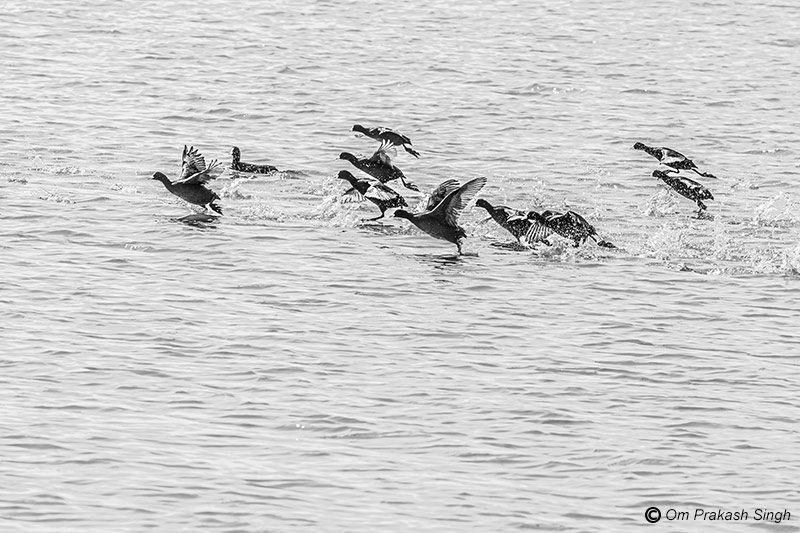
A flock of fluttering Eurasian coot (Fulica atra) in Viprasar - a migratory bird from Central and Western Asia
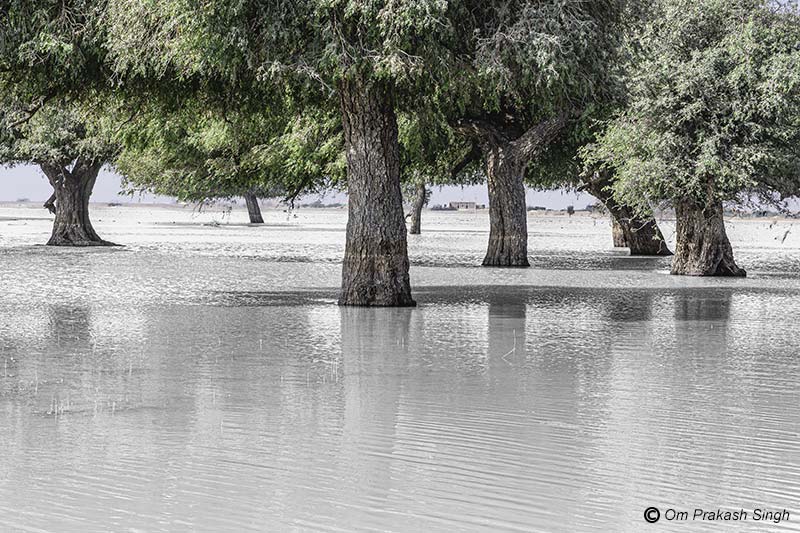
Viprasar sustaining Khejri trees, the lifeline of the Thar Desert
Viprasar helps sustain patches of green in the otherwise arid landscapes of Netsi and the wider Ramgarh region by retaining moisture and recharging shallow groundwater. The availability of water supports the growth of grasses, shrubs, and native desert trees such as Khejri (Prosopis cineraria), creating valuable sources of shade, food and habitat for both people and wildlife. Often regarded as the lifeline of the Thar Desert, the Khejri tree is deeply woven into local life, providing fodder for livestock, enriching soils, and offering shelter in a landscape where every tree matters. Together, this vegetation helps stabilize sandy soils, reduce wind erosion, and create a cooler, more hospitable microclimate, strengthening the resilience of the surrounding desert ecosystem.
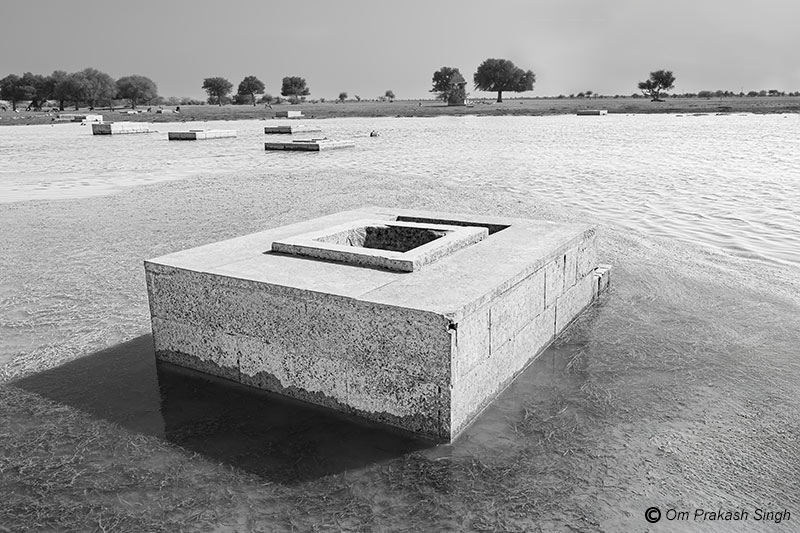
Shallow wells (beris) visible in the receding waters of Viprasar during the spring season
Each year, Viprasar transforms with the seasons. After the monsoon showers it attains the form of a large pond whose waters often spread across more than 8 hectares, while with advancing dry season, the surface water expanse gradually shrinks exposing several shallow wells, locally called ‘beri’. Thus, the wetland also functions as a natural percolation tank, recharging shallow groundwater (locally recognized as ‘rejwani pani’) in a perched aquifer which lies within the multani mitti layer underlying the wetland base. The rejwani pani is accessed through the beris. Together, these sources of surface water (palar pani) and percolated groundwater (rejwani pani) have long been relied upon by the local community, who believe they can provide water security through seven consecutive drought years.
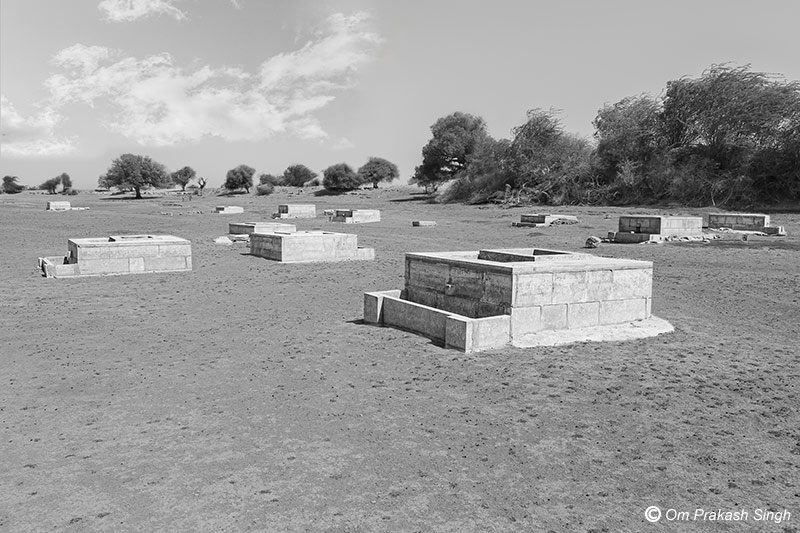
Viprasar turned into a taanda with beris after drying up of the surface water during the summer season
As the dry season advances, the surface water ultimately disappears, transforming Viprasar into a ‘taanda’—a cluster of beris dependent on rejwani pani, that continues to provide drinking water for the remainder of the year. According to the local community the taanda once consisted of around 120 beris shared among the twelve member villages, including Netsi. At present, only 24 of these wells remain in active use, largely serving the women of Netsi. In 2006, these beris were rejuvenated by the community in collaboration with an organization named Sambhaav.
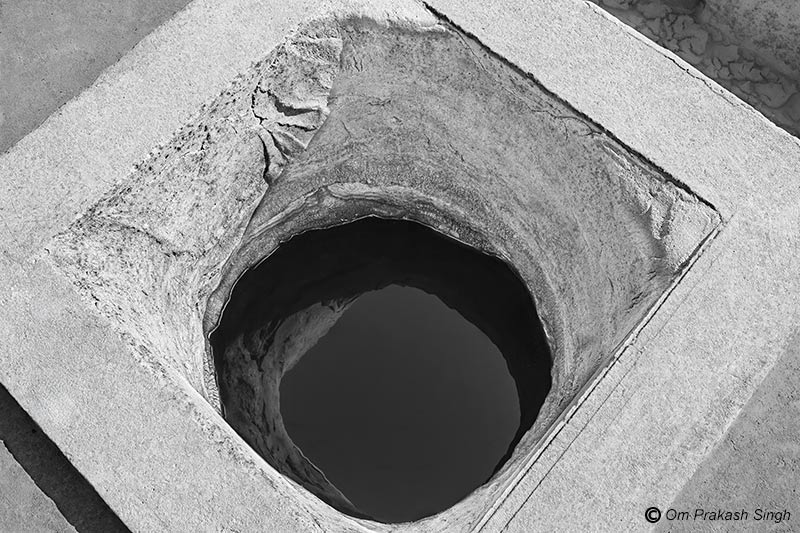
A beri showing high water table
The beris of Viprasar are hand dug shallow wells, around 8-10 meters in depth and one meter in diameter. When they first get recharged during the rainy season, water is initially available at barely half a meter, as seen in the above photo. With progressive abstraction, the water table starts deepening, but even at the end of the dry season, women are generally able to obtain water at merely 3-3.5 meters. Water is available in the beris due the multani mitti layer underlying Viprasar base through which these are dug, this layer itself being approx. 12 meters thick. The multani mitti is said to “act like a sponge”, first absorbing the rejwani pani and later releasing it slowly to keep the beris recharged throughout the dry season. The rate of recharge may, however, slow down during the peak of the dry season but these have never dried up even through consecutive droughts.
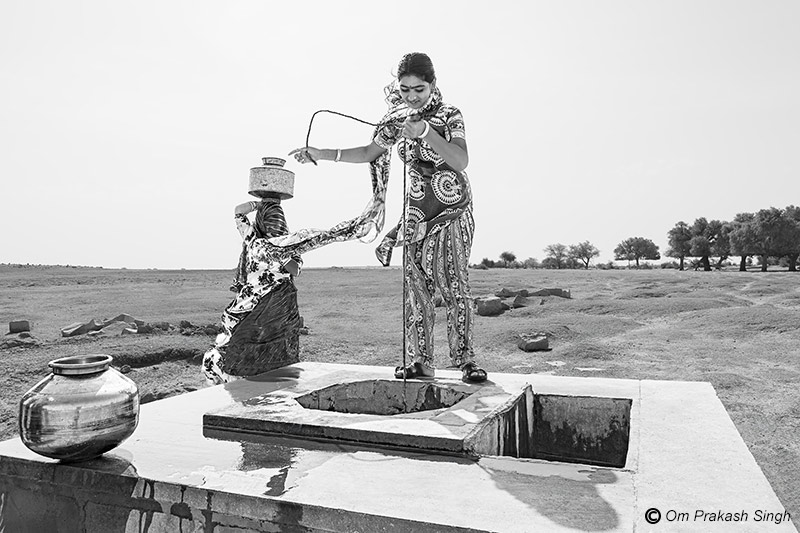
Procuring drinking water from a beri in Viprasar
During the dry months, women and girls procure fresh drinking water from the beris. They often make two trips a day, once every morning and evening. During the years with scanty rainfall, Viprasar may not necessarily fill up as a pond, but the beris still get recharged, serving as an insurance to drought. The groundwater recharge is so efficient that even with as little as 10–20 mm of rainfall, community has experienced drinking water fulfilment through three consecutive drought years. During such prolonged dry periods, the beris also become an important source of drinking water for neighboring villages if they run out of their own water stocks.
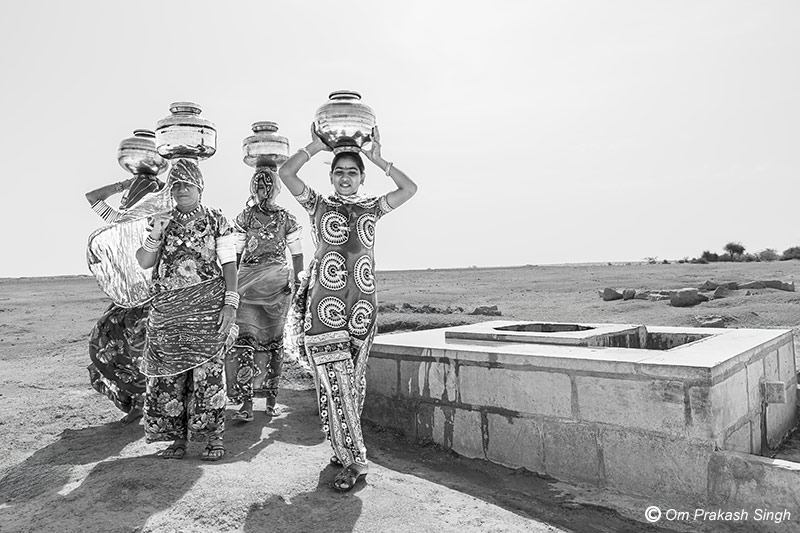
Carrying home pots full of drinking water from a beri
The beri water is regarded as clean and healthy and hence women prefer this water for drinking and cooking. According to local understanding, the multani mitti layer acts as a water filter, enhancing its overall quality, including the sweetness. This water is also believed to possess positive mineral-containing qualities which improves gut health.
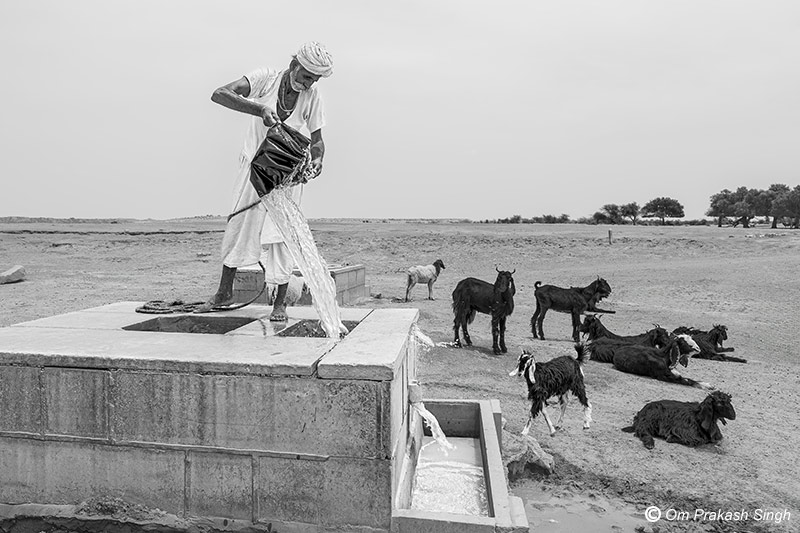
Drinking water from a beri being withdrawn for animals at Viprasar
The Viprasar taanda supports not only the drinking water needs of the community but also those of the large livestock population in Netsi and neighboring villages. Beside each beri is a kheli — a small shallow trough where water is drawn for animals to drink. While during and shortly after the monsoon, livestock are watered at smaller ponds and pools that collect seasonal rainwater across the landscape, dependence on the beris becomes high during the dry season.
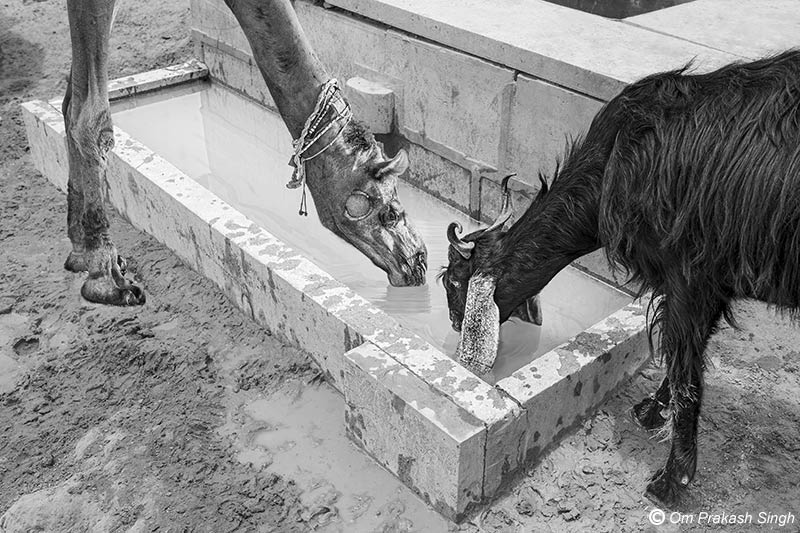
Goat and camel drinking water together at a kheli in Viprasar
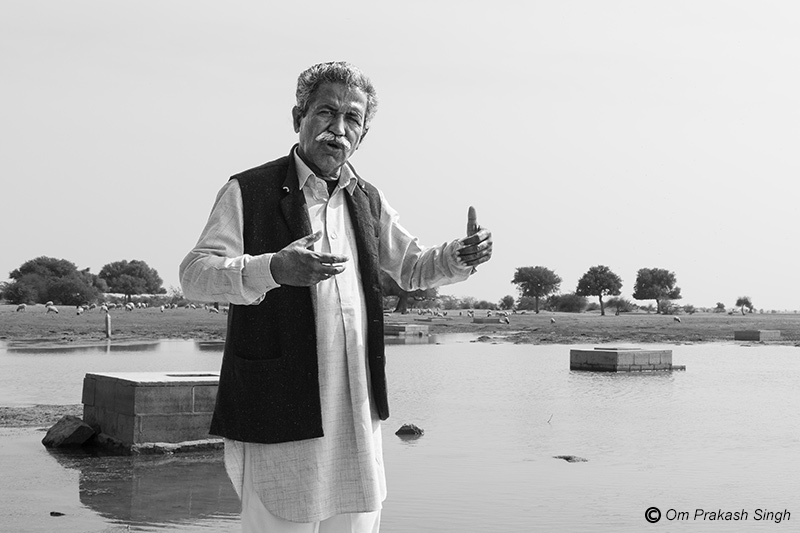
Chattar Singh Jam – the ‘water wizard’ of Thar Desert - who mobilizes the local community for Viprasar management
The rejuvenation and maintenance of Viprasar has long been guided by Chattar Singh Jam, a water expert from nearby Ramgarh with extensive knowledge of the region’s ecology, water resources, and traditional adaptation practices. Through his work to strengthen water security and climate resilience across Netsi and 22 other desert villages, he has earned numerous local and national level awards and accolades. He has been mentoring the local community to collectively manage and develop Viprasar as an enduring multi-functional wetland. This stewardship is rooted in the cultural belief that caring for water bodies is a shared responsibility and virtuous act. Accordingly, men, women and even children from every household contribute time, labor, or resources for Viprasar through festivals, life-cycle events, and the annual summer cleaning of the pond.
This photo story has shown how, for centuries, the Viprasar wetland system has quenched thirst, sustained livelihoods, supported biodiversity, and nurtured community well-being despite recurring droughts and climatic uncertainty. With the changing seasons, Viprasar alternates between a large pond and a wetland basin dotted with shallow wells that continue to provide water even through consecutive drought years. Recent rejuvenation has further strengthened the system by creating a permanent water pocket that supports both livestock and wildlife during the long dry season. Together, these surface and groundwater resources provide water security and strengthen the community’s resilience to climatic extremes, sustained through generations of ecological knowledge, collective stewardship, and cultural beliefs.
Viprasar is therefore much more than a water-harvesting structure. It is a living social-ecological system in which technology is deeply rooted in local ecology and governed through community institutions, practices, and values. Also, the system continues to evolve in response to changing environmental and social conditions. The Viprasar story clarifies that water security and climate resilience are not independent sustainability goals but are two sides of the same coin. While secure water reduces vulnerability to drought, erratic rainfall, and extreme heat, resilient ecosystems, adaptive governance, and community stewardship help sustain the water system itself in the face of uncertainty.
In a landscape where rainfall is uncertain and drought is a recurring reality, the enduring presence of Viprasar stands as a living example of the power of local wisdom, collective action, and care for nature that sustains people, livestock, vegetation, and biodiversity in one of the harshest environments on Earth. In fact, in the current climate scenario, the Viprasar wetland system can be seen as a great adaptive template for the region because according to information from the Indian Meteorological Department, monsoon rainfall in Western Rajasthan (and therefore Thar Desert) shows increasing trends during the last two decades. On an average, rainfall has been 19% above normal during the period 2005-2024. The rainfall was deficient in only three out of these 20 years.
As climate uncertainty continues to grow across the world, the social-ecological system at Viprasar reminds us that enduring solutions for water security and climate resilience may not always require large investments or complex external projects. What is required is renewed attention to the knowledge, stewardship practices, and institutions that local communities have sustained for generations. Recognition and support for these traditional water systems as living social-ecological systems can continue to sustain people, livelihoods, and biodiversity amid adverse environmental pressures. The Viprasar experience demonstrates how locally rooted nature-based solutions can simultaneously advance multiple Sustainable Development Goals, including water security (SDG 6), climate resilience (SDG 13), sustainable communities (SDG 11), and biodiversity conservation (SDG 15). By securing reliable access to water, such systems also contribute to the realization of the human right to water. At the same time, Viprasar highlights that resilient water systems depend not only on ecological infrastructure but also on inclusive stewardship. The knowledge, labour, and care invested by women, alongside the men, have helped sustain the system across generations, further illustrating the central message of World Water Day 2026—“Water and Gender: Where water flows, equality grows.” The experience from Viprasar therefore invites policymakers and practitioners to view women, men and children in local communities not merely as beneficiaries of action for water or climate, but as active rights holders, knowledge holders, and partners in building resilient, equitable, and sustainable futures together.
%20(100x100)%20(50x50)%20(20x20).jpg)
.png)